Every now and then, I intentionally reset my calendar.
Not as an exercise in optimisation for its own sake, but as a way to step back and reflect on how my time is actually being spent and whether it still aligns with the impact I’m expected to have. Over the years, I’ve experimented with different approaches to protect focus and work more deliberately. Some worked well. Others didn’t.
This post is a reflection on what I’ve learned so far.
What worked
Colour coding
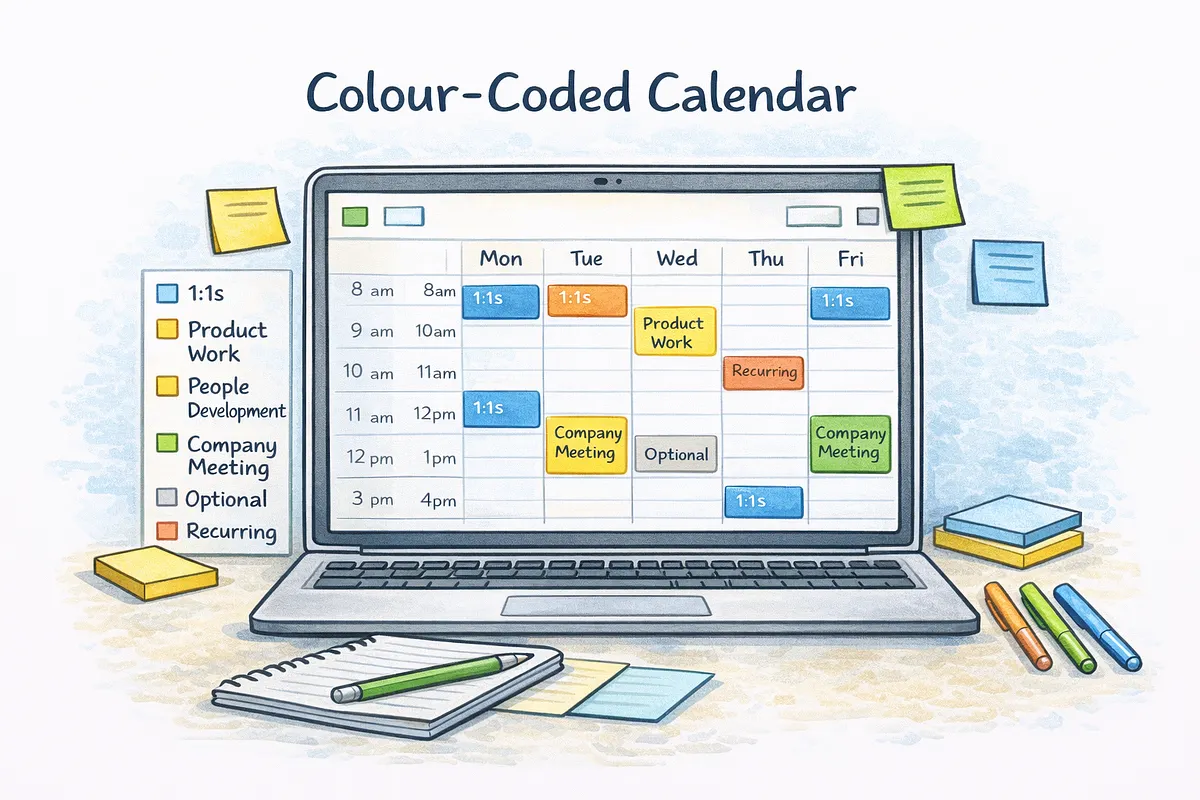
Colour coding my calendar helped me see, very clearly, where my time was going. 1:1s, product work, people development, recurring meetings, optional meetings, company-wide sessions, each had its own colour.
Seeing my calendar visually made trade-offs obvious. It highlighted whether my time reflected my priorities and where it didn’t. This alone led to better decisions about what to keep, change, or stop.
Regular cleanup
Every few months, I do a full calendar cleanup. I remove recurring meetings, question defaults, and reshape my week with productivity and focus in mind.
A word of caution: this only removes meetings from your calendar, which can cause confusion if not communicated, as I've learnt. Used thoughtfully, though, it’s an effective way to prevent calendar creep and reset expectations.
Honour focus time
If it’s focus time, it’s focus time.
I don’t negotiate it. There may be one or two occasions every couple of months where it has to be overridden for important, group-wide sessions that could not be rescheduled but those should be exceptions, not the norm.
Protecting focus time is less about rigidity and more about signalling what matters. Specifying what the focus time is for also helps. I usually add it to the description so that I don't forget.
What didn’t work
Meeting-free days
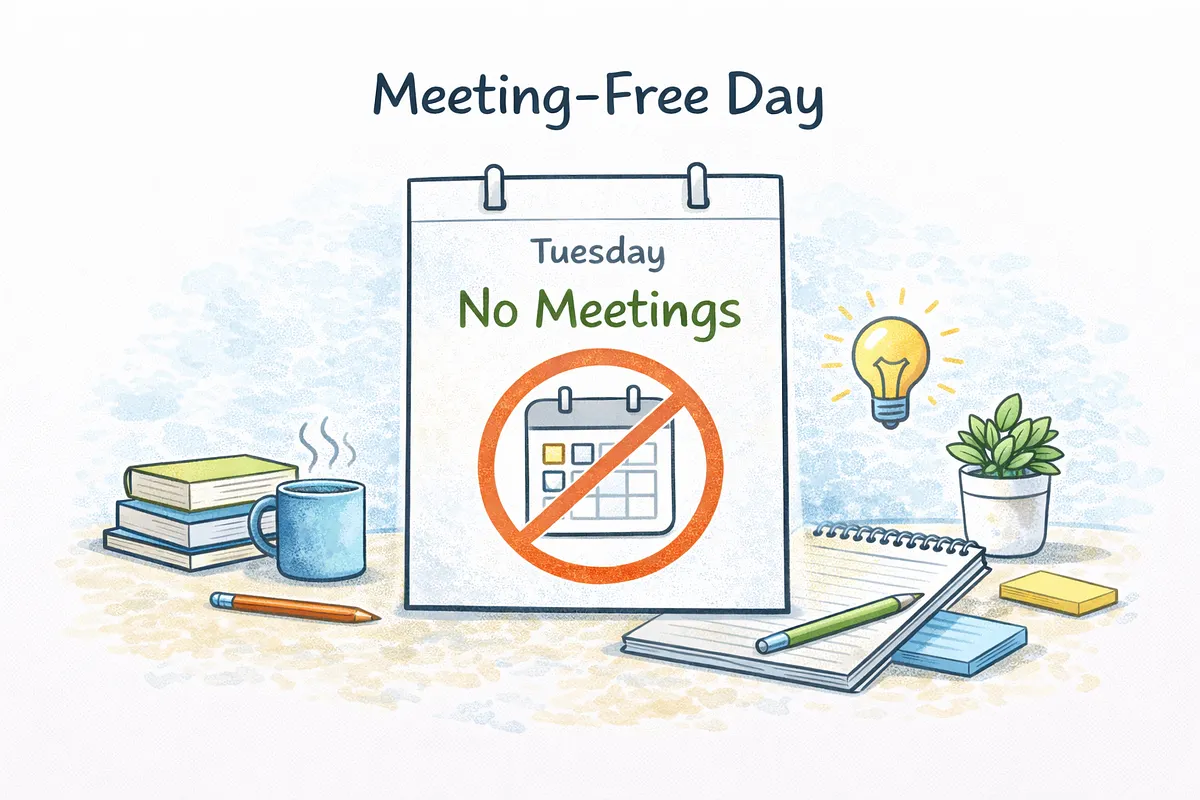
I love the idea of no-meeting days, but in my role they aren’t consistently practical. Unless it’s a company-wide practice, they’re hard to enforce and often break down quickly.
They might work well in other contexts just not reliably in mine.
Compensating with after-hours work
Blocking focus time only to compensate by working evenings defeats the purpose.
Time has a way of expanding or contracting based on constraints. Give a team an hour to solve a problem, and they usually will. Remove the constraint, and the work stretches.
The real lever isn’t working longer it’s deciding what actually needs to be done. Prioritisation matters as much as time protection.
Final reflection
Resetting calendar isn’t about control it’s about clarity.
Not every technique works in every role or phase of a career. But being intentional about time, questioning defaults, and regularly recalibrating has consistently helped me focus on what matters most.
If you haven’t looked at your calendar in a while, consider taking a moment to step back and review it. Not to optimise every minute, but to ask whether your time reflects what truly matters in your role today.